Beyond Surveys: Building a Culture of Accountability Through Feedback-Driven Action Planning

Dr. Emeliza Estimo
Research Coordinator
JBLCF-Bacolod
"Data without direction is just a file on a shelf. The true measure of an institution's leadership isn't how much feedback it collects, but how quickly that feedback is transformed into measurable change."
Higher education institutions regularly gather feedback from stakeholders through institutional surveys. However, one persistent challenge is ensuring that these valuable sources of information are translated into concrete actions rather than remaining as reports filed away after presentation. While survey findings and research recommendations often identify areas requiring improvement, departments may struggle to systematically evaluate previous interventions, monitor progress, and formulate evidence-based action plans that directly address stakeholder concerns.
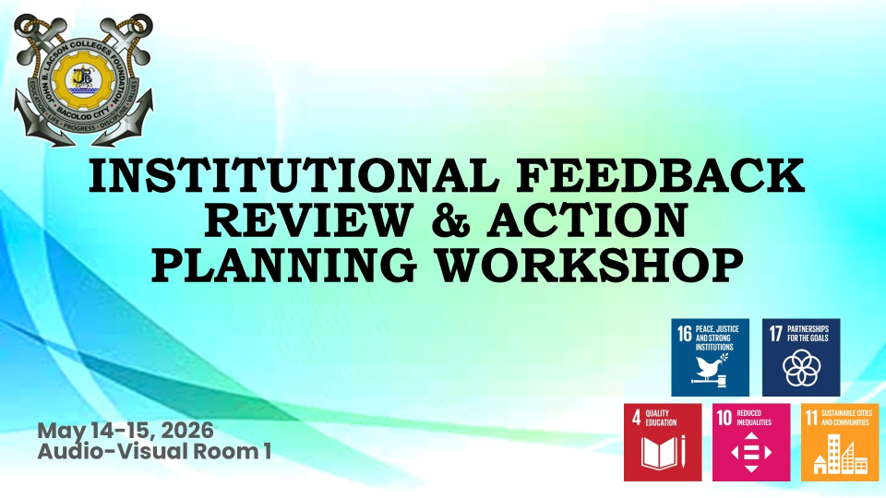
Recognizing the need for a more structured approach to institutional responsiveness, JBLCF-Bacolod has adopted the Institutional Feedback Review and Action Planning Workshop. The initiative was designed and held annually to strengthen accountability, promote evidence-based decision-making, and ensure that stakeholder voices are meaningfully incorporated into departmental planning and improvement efforts. The workshop serves as a mechanism to close the feedback loop by translating survey results and research findings into actionable, measurable, and verifiable interventions.
Source of the Best Practice
The best practice was developed internally by integrating principles of continuous quality improvement, outcomes-based management, stakeholder-centered governance, and research utilization. It was further informed by institutional assessment processes that emphasize evidence-based planning and systematic evaluation of action plans. The workshop design reflects the institution's commitment to using stakeholder feedback and research findings as drivers of organizational learning and continuous improvement.
What Was Adopted or Developed?
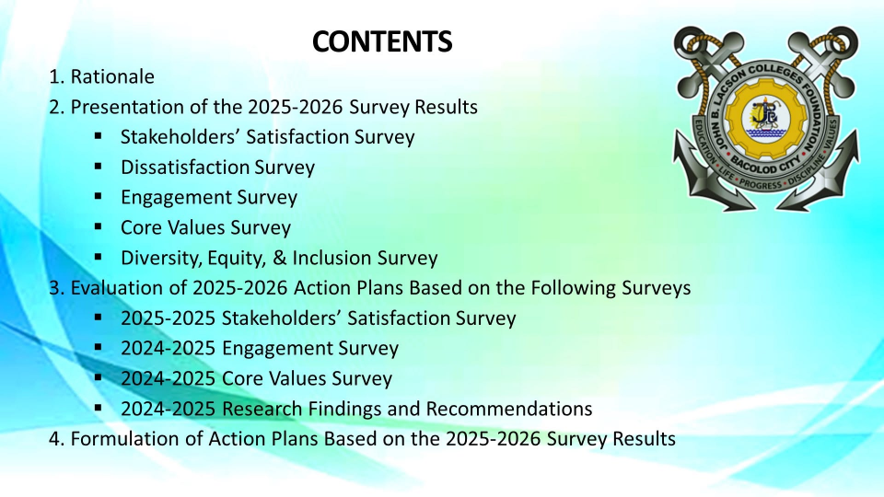
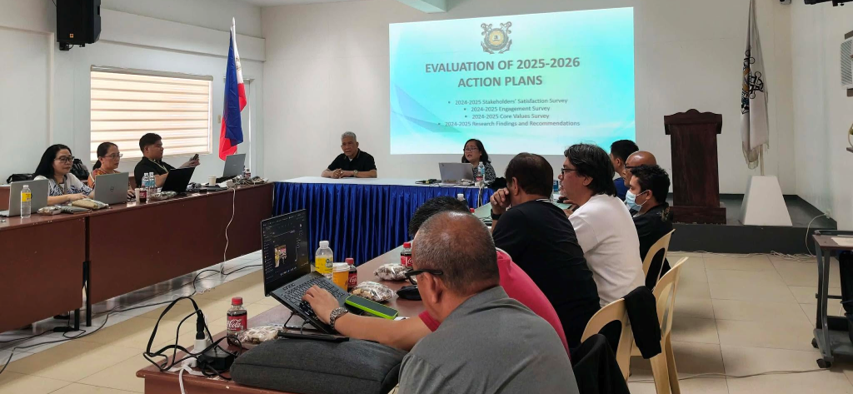
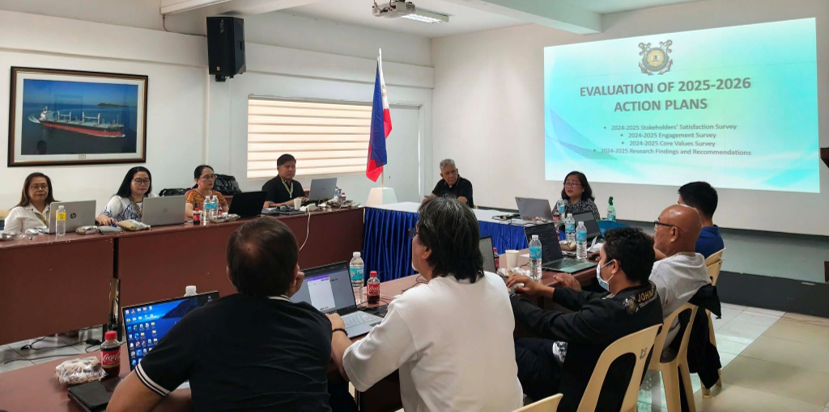
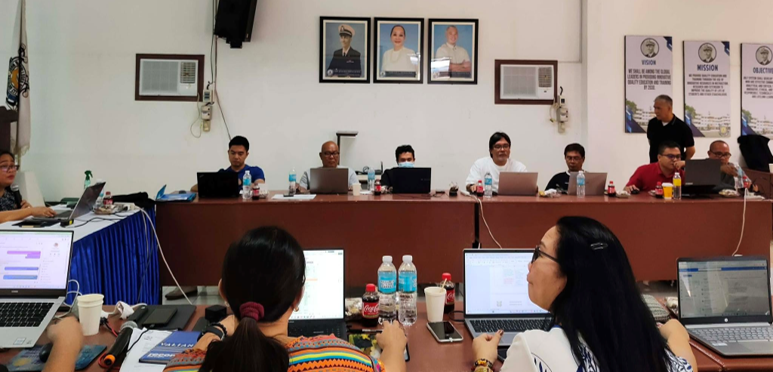
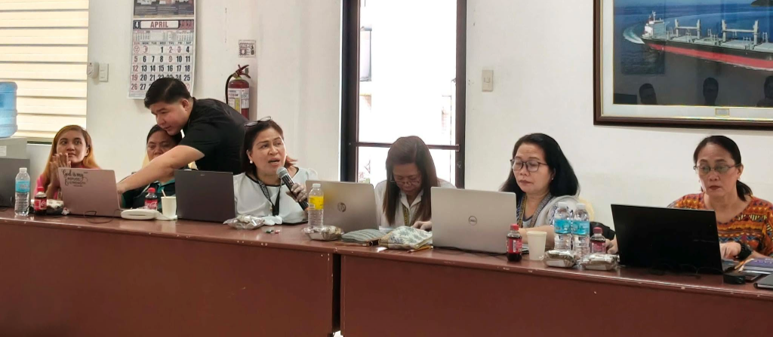
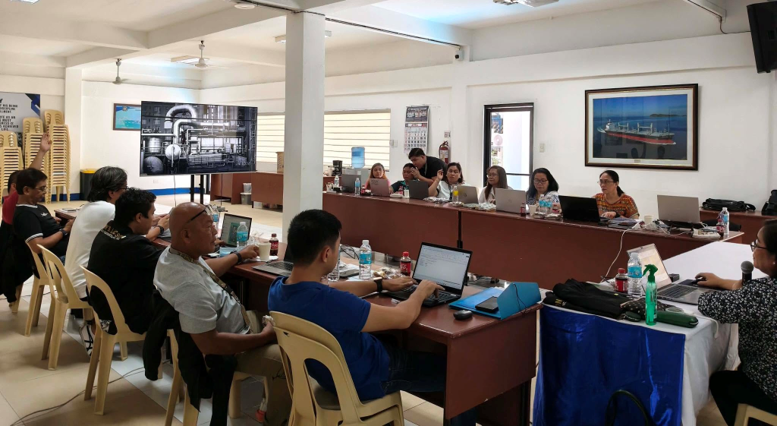
The Research and Development Office developed and facilitates the Institutional Feedback Review and Action Planning Workshop, a two-day collaborative activity that brings together department heads and institutional leaders to review survey results, evaluate the effectiveness of previously implemented action plans, and formulate new interventions based on current stakeholder feedback and research findings. The workshop reports and addresses feedback resulting from the institutional surveys conducted at JBLCF-Bacolod: Stakeholders’ Satisfaction and Dissatisfaction Survey, Employees and Students Engagement Survey, Core Values Survey, and Diversity, Equity, and Inclusion Survey. It also covers action planning based on the research findings and recommendations consolidated from the previous year’s studies.
For What Purpose?
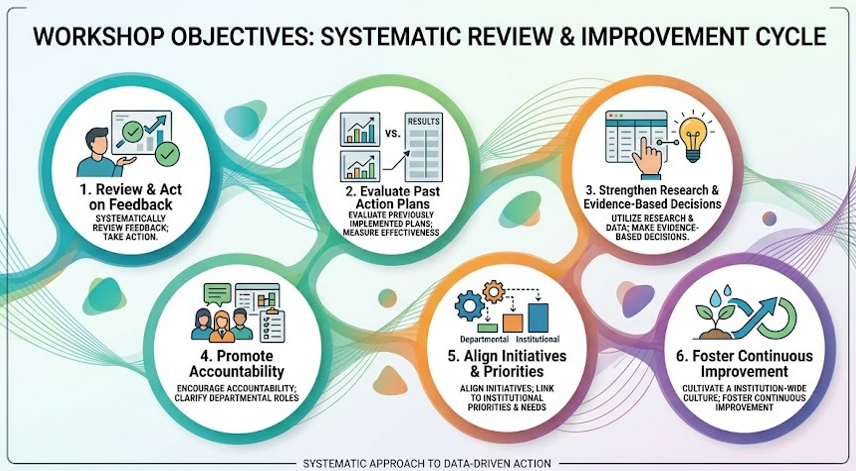
The workshop was designed for the following objectives:
How Does the Best Practice Work?
Using MS Teams as a platform for reviewing the data in their digital format, the workshop follows a structured review-and-action cycle. First, participants examine the results of institutional surveys, including stakeholder satisfaction, dissatisfaction, engagement, core values, and DEI assessments. They are encouraged to approach feedback objectively and view stakeholder comments as opportunities for growth and improvement rather than personal criticism.
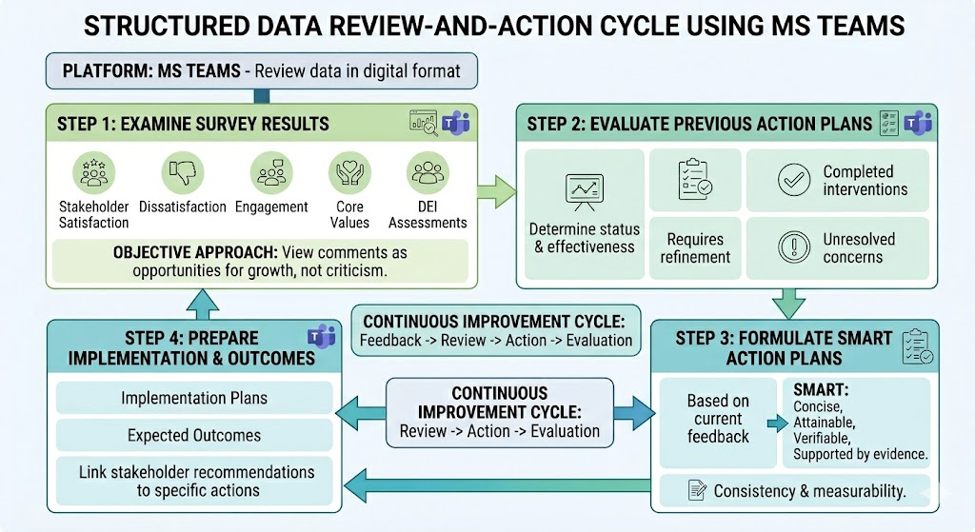
Second, departments evaluate the status and effectiveness of action plans implemented in response to previous survey findings and research recommendations. This allows departments to determine which interventions have been completed, which require refinement, and which concerns remain unresolved.
Third, participants formulate SMART action plans based on current stakeholder feedback. To promote consistency and measurability, departments are guided in developing concise, attainable, and verifiable action plans that can later be supported by evidence of implementation.
Finally, departments prepare implementation plans and expected outcomes, ensuring that recommendations from stakeholders are directly linked to specific institutional actions. The process transforms feedback into a cycle of review, action, evaluation, and continuous improvement.
Benefits Derived from the Best Practice
The Institutional Feedback Review and Action Planning Workshop has generated several significant benefits for the institution.
First, it has strengthened accountability by requiring departments to evaluate the outcomes of previously implemented action plans before proposing new interventions. This minimizes the likelihood that stakeholder concerns will be overlooked or repeatedly addressed without measurable results.
Second, the workshop has enhanced evidence-based decision-making. Rather than relying on assumptions, departments formulate interventions grounded in survey data, stakeholder feedback, and research findings.
Third, the initiative has improved cross-departmental collaboration by bringing together leaders from different departments to discuss common concerns, share best practices, and align institutional priorities.
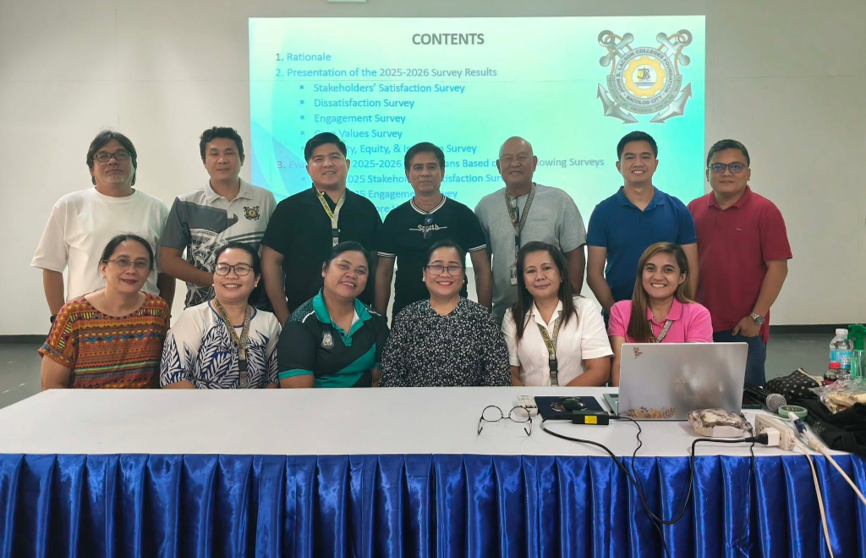
Finally, the workshop has reinforced a culture of continuous quality improvement by embedding feedback review, action planning, and evaluation into the institution's annual planning cycle.
Feedback from Stakeholders
Feedback from participants has been positive, particularly regarding the workshop's structured and collaborative approach. Department heads appreciated the opportunity to systematically review stakeholder concerns, assess the effectiveness of prior interventions, and formulate evidence-based, actionable solutions. The process also promoted greater awareness of institutional survey results and encouraged departments to take collective responsibility for improving services and stakeholder experiences.
Moreover, the workshop provided a practical mechanism for utilizing institutional research findings and stakeholder feedback in departmental planning. By directly linking recommendations to action plans, the institution strengthened its responsiveness to stakeholder needs while improving the traceability and accountability of improvement initiatives.
Acknowledgment
The success of the Institutional Feedback Review and Action Planning Workshop would not have been possible without the support and active participation of the institution's Administrator, department heads, faculty members, staff, and stakeholders, whose feedback serves as the foundation for continuous improvement. Special recognition is given to the Research and Development Office for facilitating the collection, analysis, dissemination, and utilization of institutional feedback and research findings, thereby helping cultivate a culture of evidence-based decision-making and quality enhancement throughout the institution.