Innovate, Integrate, Elevate: Transforming Cadet Preparation Through Digitalized Onboard Training Management
2/O Nestor A. Herpacio Jr.
Onboard Training Supervisor
"The true measure of an educational institution is not how efficiently it processes students, but how effectively it prepares them for the realities that await beyond its gates."
In maritime education, preparation is everything. Long before a cadet steps onto a vessel, stands watch on the bridge, or enters the engine room, a crucial journey of preparation takes place behind the scenes. It is a journey shaped by guidance, mentorship, systems, and experiences designed to bridge the gap between academic learning and life at sea.
At John B. Lacson Colleges Foundation (Bacolod), Inc., the Onboard Training Office recognized that fulfilling this responsibility required more than compliance with regulations. It required innovation. It required collaboration. And most importantly, it required a commitment to continuously improve the way students are prepared for their transition from learners to maritime professionals. This commitment gave rise to a transformative initiative aptly titled "Innovate, Integrate, Elevate: Transforming Cadet Preparation Through Digitalized Onboard Training Management." More than a collection of programs and procedures, the initiative represents a shift in mindset—one that views every orientation, every document processed, every student interaction, and every operational improvement as an opportunity to create a better experience for future seafarers.
What began as an effort to address challenges in student engagement, process efficiency, and clerical operations evolved into a comprehensive system of innovations that transformed how the Onboard Training Office serves its stakeholders. Through immersive learning programs, streamlined processes, collaborative leadership, and digital transformation, the office has successfully redefined what student preparation can look like in a modern maritime institution.
Beyond Compliance: Creating Experiences that Matter
Like many educational offices, the OTO faced familiar challenges. Student participation during orientations was often passive. Administrative procedures required continuous refinement. Clerical tasks consumed significant time and effort. While the office consistently met regulatory requirements, its team believed there was room to make the entire process more engaging and efficient. A simple question arose. What if orientation and seminars could become an experience rather than just a requirement? That question became the catalyst for change.
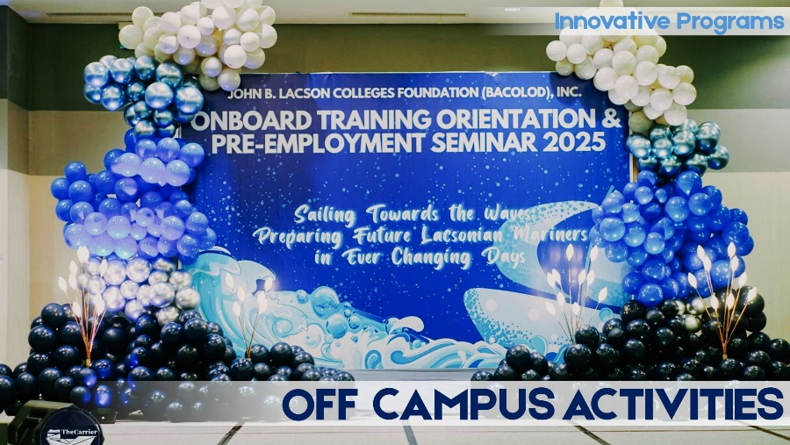
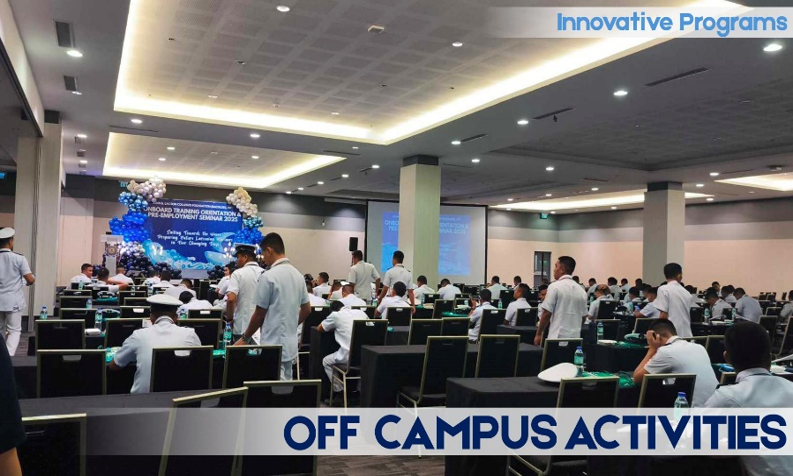
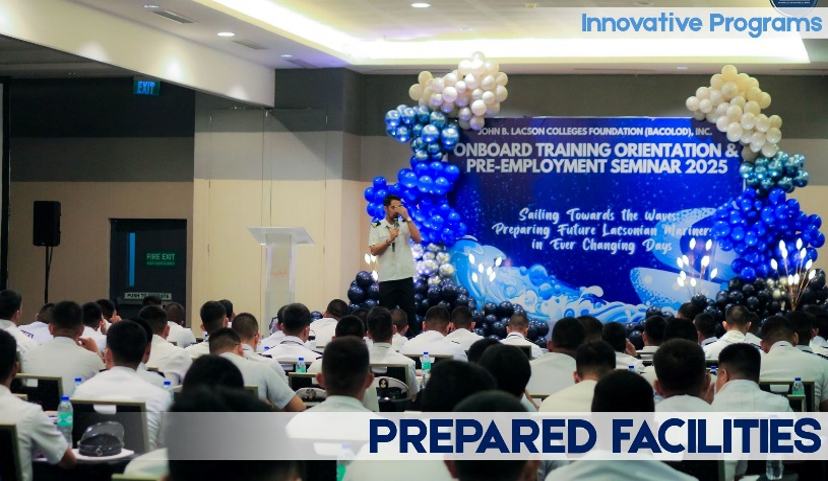
Instead of conducting the Onboard Training Orientation and Pre-Employment Seminar in a traditional classroom setting, the office transformed the event into an immersive off-campus experience. Students entered professionally prepared venues complete with thematic designs, interactive learning spaces, and program segments that encouraged active participation. What was once a routine seminar evolved into an event students looked forward to attending.
Learning Through Interaction
The redesigned program introduced a refreshing approach to student engagement. Industry practitioners, maritime professionals, and resource speakers shared insights about life at sea, employment opportunities, and professional expectations. Rather than relying solely on lectures, the event incorporated interactive discussions and panel sessions, allowing students to ask questions and engage directly with speakers.
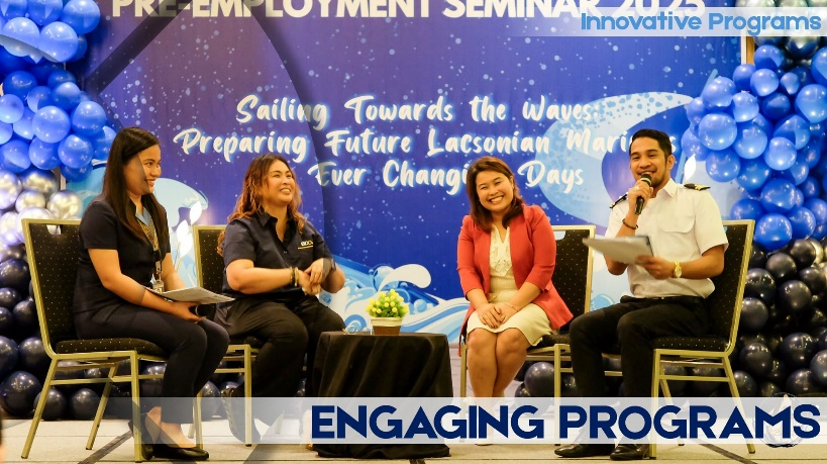
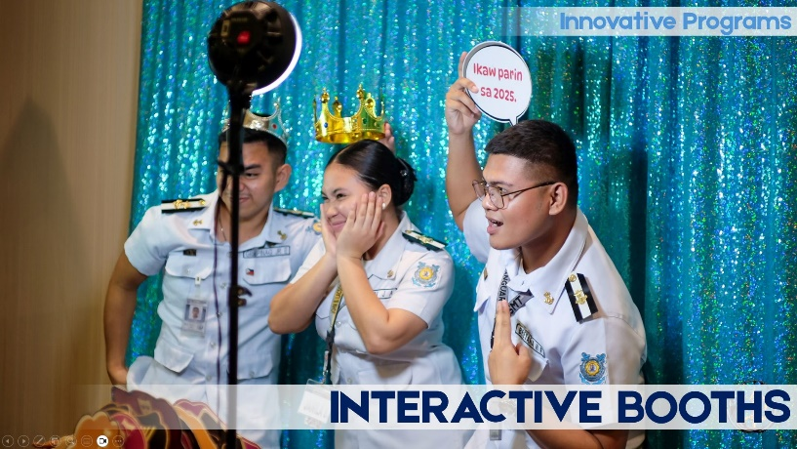
Perhaps one of the most memorable features was the introduction of interactive booths. Students moved beyond passive listening and became active participants in activities that reinforced learning and fostered camaraderie among future seafarers. The atmosphere was energetic, collaborative, and distinctly different from traditional orientations and seminars. For many students, it was their first glimpse of the professional environment they would soon enter.
Improving the System Behind the Service
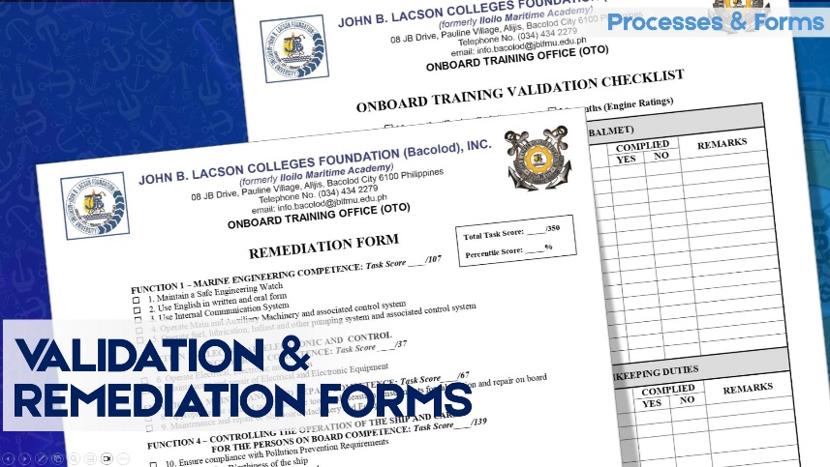
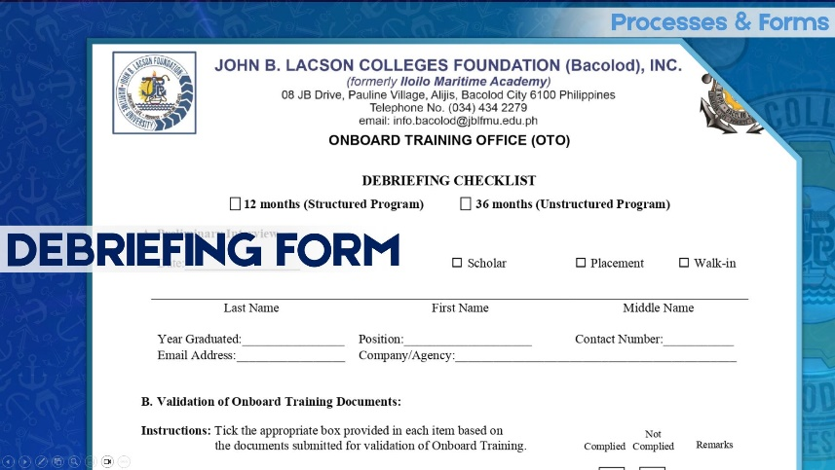
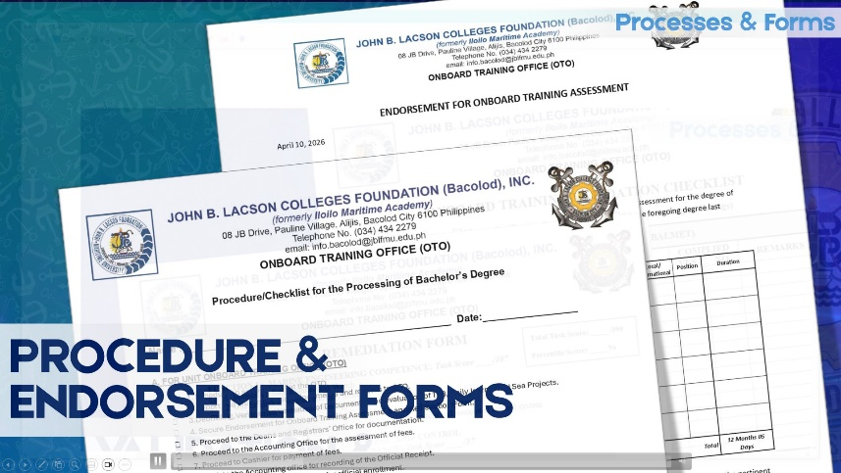
While students experienced the visible changes, another transformation was taking place behind the scenes. The OTO began reviewing its internal procedures and documentation systems to identify opportunities for improvement. New tools such as the Debriefing Checklist, Validation and Remediation Forms, and Procedure and Endorsement Forms were developed to provide structure and consistency in office operations. These improvements ensured that students received clear guidance regarding their requirements and training records. More importantly, they enabled supervisors to evaluate and assist students through a standardized, transparent process. By refining these systems, the office reduced uncertainty and improved service delivery, benefiting both students and personnel.
The Power of Teamwork
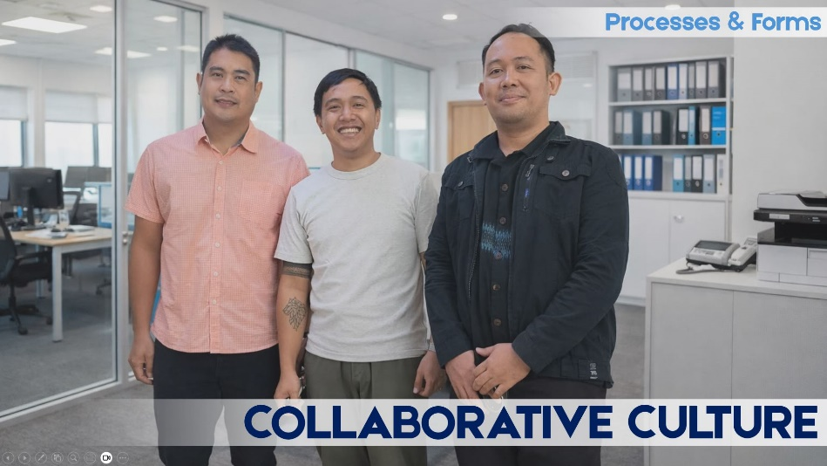
Innovation rarely succeeds through individual effort alone. One of the defining strengths of the Onboard Training Office is its culture of collaboration. Supervisors and staff members work closely together, sharing ideas, reviewing procedures, and continuously seeking better ways to serve students. This collaborative environment enabled the office to implement changes more effectively and sustain improvements over time. Rather than viewing challenges as obstacles, the team embraced them as opportunities to innovate. Their collective commitment became the foundation upon which many of the office’s successful initiatives were built.
A Digital Solution to an Old Problem
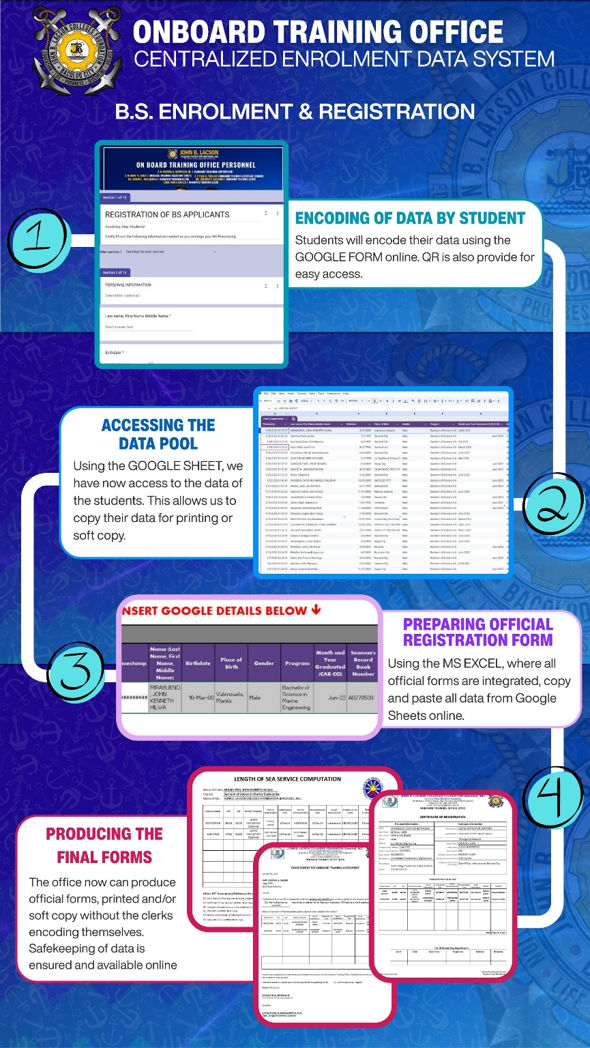
Among all the innovations introduced by the office, perhaps none has had a greater operational impact than the development of the Centralized Enrollment Data System (CEDS). Before CEDS, staff members spent countless hours manually encoding student information, transferring data between forms, and preparing official documents. The process was repetitive, time-consuming, and vulnerable to human error.
Recognizing the need for a smarter solution, the office designed a digital workflow that simplified the entire process. Students now submit information directly through online forms. Data is automatically organized into a centralized database where office personnel can access, verify, and utilize records as needed. Official forms can then be generated efficiently using integrated templates.
The results were immediate. Clerical workload was significantly reduced. From 30 minutes of processing per student, it impressively dropped to 5 minutes. Data became more organized and secure. Processing time improved. Staff members were able to focus more on student support and less on repetitive encoding tasks. What once required multiple layers of manual work could now be accomplished with greater speed and accuracy.
Beyond improving efficiency, CEDS has also enhanced the quality of decision-making within the office. With student information readily available in a centralized, searchable database, personnel can quickly retrieve records, monitor enrollment trends, and generate accurate reports as needed. The system has improved data consistency, minimized record duplication, and strengthened accountability in handling student information. More importantly, it has fostered a culture of innovation and continuous improvement, demonstrating how a simple yet strategic digital solution can transform routine administrative processes into a more responsive, reliable, and student-centered service.
Preparing Future Mariners for an Ever-Changing Industry
The maritime industry continues to evolve, and maritime education must evolve with it. The innovations implemented by the Onboard Training Office demonstrate how even simple, practical improvements can create meaningful change. Through creative programming, strengthened processes, collaborative leadership, and digital transformation, the office has enhanced both operational efficiency and student experience. More importantly, these initiatives reflect a deeper commitment to preparing future mariners not only for compliance requirements but for successful careers at sea.
As the office continues to refine its programs and systems, its guiding principle remains clear: Innovate. Integrate. Elevate. Three goals that capture a continuing journey toward excellence—one that ensures every maritime student is better prepared, better supported, and better equipped to navigate the challenges of the profession they have chosen. For the Onboard Training Office, innovation is not simply about changing processes. It is about creating opportunities, empowering students, and shaping the next generation of Lacsonian seafarers.